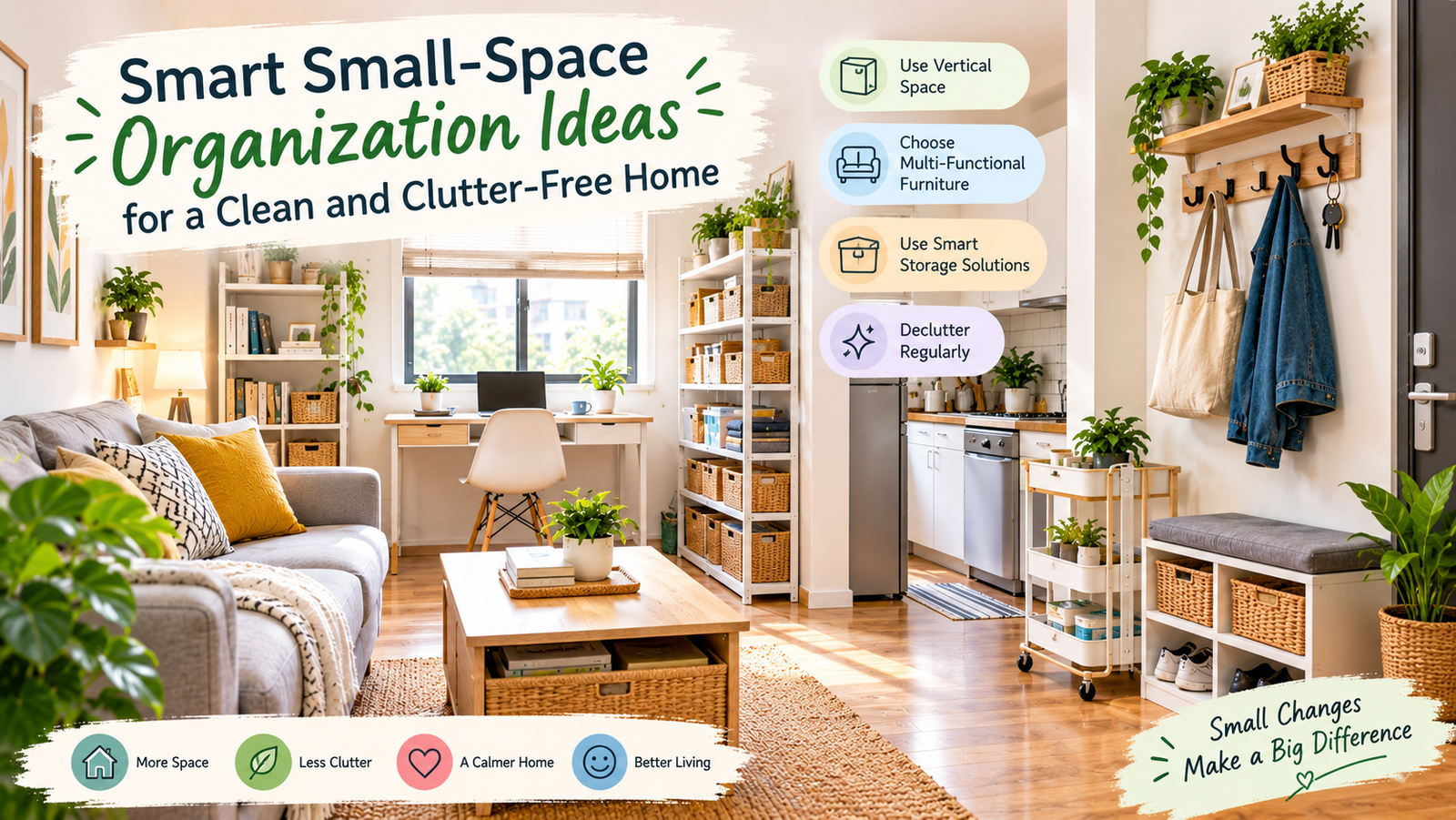
Living in a small home does not mean you have to sacrifice comfort, style, or functionality. With the right small-space organization ideas, you can transform even the smallest apartment, bedroom, kitchen, or living room into a clean, attractive, and comfortable environment. Whether you live in a studio apartment, a small house, or a compact rented room, smart organization can help you make the most of every available inch.
A clutter-free home can also make daily life easier. When everything has a designated place, you spend less time searching for belongings and more time enjoying your surroundings. Simple changes, such as using vertical storage, organizing drawers, choosing multifunctional furniture, and removing unnecessary items, can make a noticeable difference.
In this guide, we will explore practical small-space organization ideas, affordable storage solutions, minimalist home organization tips, and creative ways to keep your home clean and clutter-free without spending a fortune.
Why Small-Space Organization Matters
Small spaces can quickly become crowded when belongings do not have designated storage areas. Clothes, kitchen equipment, books, electronic accessories, and decorative items can occupy valuable surfaces, making rooms feel smaller than they actually are.
Effective home organization helps you use your available space more efficiently. Instead of adding more furniture or moving to a larger home, you can create additional usable space by organizing what you already own. For example, an under-bed storage box can hold seasonal clothing, while wall-mounted shelves can provide storage without taking up floor space.
A well-organized home can also support a calmer daily routine. Clutter may make it more difficult to concentrate or relax, particularly when your bedroom or living area also serves as a workspace. Keeping essential items accessible and unnecessary belongings out of sight can create a more peaceful atmosphere.
The goal is not to make your home look empty or remove everything you enjoy. Instead, the goal is to create a practical, attractive living space where every item has a purpose and a suitable place.
1. Declutter Before Organizing
One of the most effective small-space organization ideas is to declutter before purchasing storage products. Organizing unnecessary belongings can make your home look tidy temporarily, but it will not solve the problem if you continue to keep items you no longer use.
Start with one small area, such as a bedside table, kitchen drawer, wardrobe shelf, or bathroom cabinet. Remove everything from that area and separate the items into four groups: keep, donate, recycle, and discard.
Keep items that you regularly use, genuinely need, or truly value. Donate usable belongings that are no longer useful to you, and recycle suitable materials according to local guidelines. Dispose of damaged or unusable items responsibly.
Avoid trying to organize your entire home in one day. Completing one small area at a time makes the process more manageable and helps you see immediate results.
Once you have removed unnecessary belongings, arrange the remaining items according to their purpose. This creates a stronger foundation for long-term home organization.
2. Make the Most of Vertical Space
When floor space is limited, look upward. Walls, the backs of doors, and unused vertical areas can provide valuable storage opportunities.
Install shelves above desks, beds, or work surfaces to store books, small storage boxes, decorative objects, and everyday essentials. Wall-mounted organizers can also hold stationery, accessories, and lightweight household items.
In kitchens, vertical racks can organize spices, cooking tools, and frequently used utensils. In bathrooms, wall-mounted shelves can keep toiletries organized without overcrowding the sink.
You can also use hooks to hang bags, jackets, hats, keys, and other frequently used belongings. Door-mounted organizers are particularly useful in bedrooms, bathrooms, and utility areas.
Before installing shelves or hooks, check the wall type, weight limits, and appropriate mounting hardware. Renters may prefer removable hooks or freestanding shelving where permitted.
Using vertical space keeps important belongings accessible while leaving more floor area available for movement.
3. Choose Multifunctional Furniture
Multifunctional furniture is especially useful for small apartments and compact bedrooms because it serves more than one purpose.
A storage bed provides space for extra bedding, seasonal clothes, shoes, or luggage. An ottoman with a removable lid can function as seating, a footrest, and hidden storage. A coffee table with drawers or shelves can hold books, remotes, magazines, and other living-room essentials.
If you work from home, consider a foldable desk or a wall-mounted work surface that can be closed when not in use. Extendable dining tables can provide extra room when guests visit and take up less space during everyday meals.
When choosing furniture, pay attention to size, functionality, and ease of use. Large multifunctional pieces are not always the best option if they overwhelm a small room. Measure the available area before purchasing anything.
The best furniture for a small home is practical, comfortable, and appropriately sized.
4. Organize Your Bedroom for Better Space Utilization
Bedrooms often become cluttered because they contain clothing, shoes, accessories, bedding, personal items, and sometimes work equipment.
Start by organizing your wardrobe. Remove clothes you no longer wear and group the remaining items into categories such as shirts, trousers, dresses, everyday outfits, and seasonal clothing. You can further organize garments by color if that makes choosing outfits easier.
Use slim hangers to save wardrobe space and shelf dividers to keep folded clothes in neat stacks. Small boxes can hold socks, belts, scarves, and accessories.
The space beneath your bed is another useful storage area. Store seasonal clothing, spare bedding, and other infrequently used belongings in labeled containers. Choose containers that slide easily under the bed and protect their contents from dust.
Keep your bedside table simple by storing only frequently used items, such as a lamp, book, phone charger, or water bottle. Use a small drawer organizer if necessary.
A tidy bedroom feels more inviting and makes daily routines, including getting dressed and preparing for sleep, easier to manage.
5. Use Smart Storage Solutions in the Kitchen
Small kitchens require careful organization because countertops, cabinets, and drawers often have limited capacity.
Begin by removing expired food, duplicate utensils, and kitchen equipment you rarely use. Keep everyday cooking tools within easy reach and store occasional-use appliances in less accessible cabinets.
Use drawer dividers to separate cutlery, measuring spoons, kitchen tools, and small accessories. Clear containers can help organize dry ingredients such as rice, pasta, flour, and cereals. Label containers clearly and store food safely according to its requirements.
Shelf risers can create additional levels inside cabinets, while stackable containers help use vertical space more efficiently. Hooks or suitable wall-mounted racks can hold frequently used utensils, provided they are installed safely and do not interfere with cooking.
Keep the countertop as clear as possible. Instead of displaying every appliance, leave only the items you use regularly.
A simple kitchen organization system makes meal preparation easier, improves visibility of ingredients, and helps reduce food waste.
6. Create a Clutter-Free Living Room
The living room often serves several purposes, including relaxing, entertaining guests, watching television, reading, and working. Without a clear organization system, these activities can quickly produce clutter.
Use baskets or decorative storage boxes to collect remote controls, chargers, magazines, blankets, and small accessories. Choose storage containers that match your room’s style so they look intentional rather than messy.
A television unit with cabinets can hide electronic accessories and cables. Floating shelves can display a few books, plants, and decorative pieces while keeping the floor clear.
Consider furniture with built-in storage, such as a bench with a compartment or a coffee table with shelves. If you have limited seating, lightweight stools that can be tucked away when not needed can provide extra flexibility.
Avoid filling every available surface with decorations. Select a few meaningful objects and arrange them thoughtfully.
A clean living room does not have to be minimalist. It simply needs a practical balance between personal style and usable space.
7. Use the Space Behind Doors
The backs of doors are frequently overlooked when planning small-home storage.
An over-the-door organizer can hold shoes, accessories, cleaning supplies, toiletries, or small household items, depending on its design and weight capacity. Hooks can be used for coats, towels, bags, and dressing gowns.
In bedrooms, door organizers may help store scarves, belts, and lightweight accessories. In bathrooms, they can provide extra space for towels and toiletries. In utility areas, suitable organizers can hold cleaning cloths and other small supplies.
Before choosing a door-mounted storage solution, check whether the door can close properly and whether the organizer is suitable for the door’s thickness and construction.
Avoid placing heavy objects on products that are not designed to support their weight. Keep potentially hazardous cleaning products away from children and pets.
This simple strategy can add useful storage without requiring additional floor space.
8. Make Under-Bed Storage Work for You
Under-bed storage is one of the easiest ways to organize a small bedroom without adding bulky furniture.
Use shallow storage containers for seasonal clothing, extra blankets, spare pillows, travel accessories, and rarely used belongings. Containers with wheels or handles are particularly convenient because they can be moved without lifting the entire box.
Label each container according to its contents. For example, one box may contain winter clothing while another holds spare bedding. Clear containers can also make it easier to identify items without opening every box.
Do not store damp clothing, food, or moisture-sensitive items in unsuitable containers. Make sure everything is clean and dry before putting it away.
If your bed sits low to the floor, measure the available clearance before purchasing storage boxes. A few properly sized containers are often more useful than several that do not fit.
Under-bed storage works best when you reserve it for items that do not need to be accessed every day.
9. Organize Small Bathrooms with Simple Storage Ideas
Bathrooms can become cluttered quickly because they often have limited cabinets and counter space.
Start by checking toiletries, cosmetics, skincare products, and cleaning supplies. Remove empty containers, expired products, and items you no longer use. Arrange the remaining belongings according to their purpose.
Use drawer dividers to separate small accessories and baskets to group similar products. Wall-mounted shelves can provide additional storage for lightweight toiletries, while hooks can hold towels and robes.
A narrow shelf or compact storage unit may fit beside the sink or toilet if there is enough room and the fixture remains accessible. Choose materials suitable for humid environments.
Keep everyday products within reach and place occasional-use items in cabinets or labeled containers.
Store medicines and cleaning products safely, following their labels and keeping them away from children. Do not place electrical appliances where they can come into contact with water.
An organized bathroom feels cleaner and makes morning and evening routines more convenient.
10. Use Clear Containers and Labels
Storage containers help group belongings and make shelves, drawers, and cabinets easier to manage. Clear containers are especially useful because you can see their contents without opening them.
Use small containers for stationery, cables, craft supplies, accessories, and other items that can easily become mixed together. Larger containers can hold toys, seasonal decorations, spare linens, or household supplies.
Labels make storage systems even more effective. Write simple descriptions such as “winter accessories,” “charging cables,” “baking supplies,” or “extra towels.”
Choose containers according to the items you need to store rather than buying a large matching set without a plan. Measure shelves and cabinets first to avoid wasting money on products that do not fit.
For items that require protection from moisture or dust, choose suitable closed containers rather than open baskets.
The purpose of storage products is to make belongings easier to locate and return to their proper places, not simply to hide clutter.
11. Create an Organized Entryway
A small entryway can become crowded with shoes, jackets, bags, keys, umbrellas, and mail. Creating a simple drop zone helps prevent these items from spreading throughout your home.
Install a few hooks for frequently used jackets and bags. A compact shoe rack or narrow cabinet can keep footwear organized without blocking the walkway. A small tray can hold keys and other everyday essentials.
If you do not have a separate entryway, dedicate a small section of a hallway or room to these items. A wall-mounted organizer may be sufficient in a particularly compact home.
Place a small basket nearby for incoming mail, but review it regularly so paperwork does not accumulate.
Keep pathways and exits clear, especially in homes with limited space. Avoid placing unstable storage furniture where it could obstruct movement.
An organized entryway makes leaving home easier and helps maintain a tidy appearance throughout the day.
12. Keep Cables and Electronic Accessories Organized
Chargers, headphones, extension cords, and electronic accessories can create visual clutter, particularly around desks and television units.
Use cable ties, reusable hook-and-loop straps, or suitable cable organizers to group wires neatly. Label chargers if several devices use similar cables. A small box or drawer organizer can hold spare charging accessories.
Keep cables away from walking paths to reduce tripping risks. Do not overload power outlets or hide electrical equipment in containers that restrict ventilation. Use cable management products according to their instructions.
For a home office, place frequently used devices close to the relevant power outlets and remove cables belonging to devices you no longer own.
A well-organized electronic setup makes a desk look cleaner and helps you find the correct accessory when you need it.
13. Adopt a Minimalist Approach to Home Décor
Minimalist home organization does not mean your home must be plain or lack personality. It means choosing belongings and decorations intentionally.
In a small room, too many colors, patterns, accessories, and oversized furniture can make the space feel visually crowded. A coordinated color palette and a few carefully chosen decorative objects can create a more balanced appearance.
Use mirrors thoughtfully to reflect available light and create a sense of openness. Choose curtains that fit the windows properly and avoid blocking natural light unnecessarily. Furniture with visible legs can also make the floor appear less crowded.
Display meaningful photographs, artwork, or souvenirs instead of placing every decorative item on shelves and tables.
Plants can add natural texture, but choose varieties suitable for your lighting conditions and available space. If you have pets or young children, check plant safety before bringing new plants into your home.
The aim is to create a home that feels personal, comfortable, and uncluttered.
14. Organize Your Home Office in a Small Space
A home office does not require an entire room. A compact desk, comfortable chair, suitable lighting, and an organized storage system can create a functional workspace in a bedroom or living area.
Choose a desk that fits your available space and provides enough room for your essential equipment. Wall-mounted shelves or a small drawer unit can store documents, notebooks, stationery, and office supplies.
Use digital files where appropriate to reduce unnecessary paper accumulation. For important physical documents, create clearly labeled folders and store them in a secure location.
At the end of each workday, return stationery to its place, remove used cups, and prepare the desk for the next session. If your desk also serves another purpose, a storage tray or portable organizer can help you pack work materials away quickly.
Keep your chair, desk, and equipment arranged to support a comfortable working position. A tidy workspace can make it easier to focus on tasks without distractions.
15. Make Small Closets More Functional
A small closet can store more than you might expect when its contents are arranged strategically.
Begin by removing clothes that no longer fit, are damaged beyond use, or have not been worn for a long time. Be realistic about what you actually need and use.
Group clothes by type and season. Place frequently worn items at eye level and move seasonal belongings to higher shelves or under-bed storage. Use shelf dividers to keep folded clothes from falling into one another.
Hanging organizers can hold bags, sweaters, or accessories if they fit the available space. Slim hangers may increase hanging capacity, while matching hangers can make the closet easier to scan visually.
Avoid packing clothes too tightly. Overcrowded hangers make garments harder to find and can cause wrinkles.
A functional closet should allow you to see your options easily and return items without disturbing everything else.
16. Create a Daily Five-Minute Decluttering Routine
One of the best ways to maintain an organized home is to spend a few minutes tidying each day.
Set aside five minutes in the morning or evening to return misplaced items to their designated locations. Put shoes away, clear the kitchen counter, fold a blanket, organize the desk, and collect objects that have accumulated on tables.
You can focus on one room each day if that feels more manageable. For example, Monday can be for the bedroom, Tuesday for the kitchen, and Wednesday for the living room.
Encourage everyone in the household to participate in keeping shared areas tidy. When belongings have clear homes, it becomes easier for everyone to return them after use.
A short daily routine is often more sustainable than waiting until clutter becomes overwhelming and then spending several hours cleaning.
Consistency is more important than perfection. Your home does not need to remain spotless every moment to be comfortable and organized.
17. Use a Seasonal Organization System
Some belongings are only needed during particular seasons. Winter coats, summer accessories, holiday decorations, and travel equipment can occupy valuable space when they are not in use.
Review these items at the beginning or end of each season. Clean them according to their care instructions, allow them to dry completely, and store them in suitable labeled containers.
Place frequently used seasonal items in accessible areas. Store belongings that will not be needed for several months on higher shelves or in other designated storage locations.
A seasonal review is also an opportunity to identify items that are no longer useful. Donate suitable clothing and household goods instead of allowing them to remain unused indefinitely.
Keep a simple inventory of important stored items if you have several boxes. This can help you find what you need without opening every container.
Seasonal organization keeps your home flexible and prevents storage areas from becoming permanently overcrowded.
18. Organize Your Home on a Budget
You do not need expensive furniture or premium storage products to create an organized home. Many useful solutions are inexpensive or may already be available in your household.
Reuse sturdy boxes to group items inside cabinets, provided they are clean and suitable for the environment. Repurpose jars for small supplies where appropriate, and use existing baskets to organize blankets, toys, or accessories.
Before purchasing storage products, measure the available space and make a list of the problems you want to solve. This prevents impulse purchases and reduces the risk of buying items you do not need.
Prioritize solutions that improve daily convenience. A small drawer organizer may be more valuable than a large decorative storage unit if your main problem is tangled accessories.
Consider buying secondhand furniture in good condition when appropriate, and check dimensions before transporting it home.
The most effective budget-friendly home organization strategy is to remove unnecessary belongings first, use existing space intelligently, and purchase only what genuinely improves functionality.
19. Common Small-Space Organization Mistakes to Avoid
Even well-intentioned organization efforts can create problems when the storage system does not match your lifestyle.
One common mistake is buying too many containers. Storage boxes can help organize belongings, but they can also consume valuable space when they are unnecessary or poorly sized.
Another mistake is keeping items without a clear reason. Storing unused belongings in attractive boxes does not eliminate clutter; it simply hides it.
Overcrowding shelves and cabinets is also counterproductive. When items are difficult to remove, people may stop returning them to their designated places. Leave enough room to access belongings comfortably.
Do not ignore safety when arranging furniture and storage. Keep exits clear, secure tall furniture when necessary, and avoid stacking heavy objects above areas where people sit or sleep.
Finally, avoid choosing organization systems solely because they look attractive online. A solution should fit your room dimensions, budget, household needs, and daily habits.
A successful system is one you can maintain without excessive effort.
20. A Simple Weekly Home Organization Plan
If your home feels overwhelming, a weekly plan can help you make steady progress without spending an entire weekend organizing.
On Monday, focus on your bedroom and wardrobe. Return clothing to its proper place and clear bedside surfaces.
On Tuesday, organize kitchen drawers, remove expired food, and wipe down countertops. On Wednesday, focus on the bathroom by sorting toiletries and organizing storage areas.
On Thursday, tidy your living room and manage cables, remotes, books, and decorative objects. On Friday, organize your entryway, shoes, bags, and everyday accessories.
Use Saturday to review a larger project, such as a closet, pantry, or home office. On Sunday, spend a few minutes preparing for the coming week and identifying any storage problems that still need attention.
Adjust the schedule according to your home and available time. You can complete each task in 10 to 20 minutes or divide larger tasks into smaller sessions.
The purpose of this plan is to create a repeatable routine rather than a strict schedule that becomes difficult to follow.
Frequently Asked Questions
What are the best small-space organization ideas?
The best small-space organization ideas include decluttering regularly, using vertical storage, choosing multifunctional furniture, organizing under-bed areas, adding drawer dividers, and keeping frequently used items accessible. Start with the area that causes the most frustration and build a simple system around your daily routine.
How can I organize a small home without spending money?
Start by removing unused belongings and rearranging furniture you already own. Reuse suitable boxes and baskets, group similar items together, and make better use of existing shelves and cabinets. Purchase new storage products only when a specific need remains.
How do I make a small room look bigger and cleaner?
Keep walkways clear, reduce unnecessary visual clutter, use appropriately sized furniture, and avoid overcrowding surfaces. Natural light, mirrors, coordinated colors, and carefully selected decorations can also help a room feel more open.
What furniture is best for small apartments?
Multifunctional furniture is often useful in small apartments. Examples include storage beds, foldable desks, nesting tables, storage ottomans, and extendable dining tables. Choose pieces that fit your measurements and support your everyday needs.
How often should I declutter my home?
Small daily tidying sessions can prevent clutter from accumulating. Review individual storage areas every few weeks and consider a seasonal review for clothing, decorations, and infrequently used belongings. The ideal schedule depends on your household size and lifestyle.
How can I keep my home organized with children or pets?
Create accessible storage locations for everyday belongings, use sturdy baskets, and establish simple routines for returning items to their places. Secure tall furniture and keep cleaning products, medicines, small choking hazards, and dangerous cables out of reach. Choose pet-safe storage and check that plants and household products are appropriate for your animals.
Is minimalist home organization necessary for a clutter-free home?
No. Minimalism is one possible approach, but an organized home can contain colorful decorations, collections, books, and meaningful personal items. The important factor is whether your belongings have suitable storage and whether your home remains comfortable and functional.
Conclusion
Creating a clean and clutter-free home is possible even when you have limited space. The key is to organize strategically, use available areas efficiently, and choose storage solutions that support your everyday routine.
Start by decluttering unnecessary belongings, making use of vertical space, organizing drawers and closets, and choosing multifunctional furniture where appropriate. Improve your kitchen, bathroom, bedroom, and living room one area at a time instead of trying to transform your entire home immediately.
Remember that effective home organization is not about achieving a perfect appearance. It is about making your surroundings easier to use, more comfortable to live in, and simpler to maintain.
With these smart small-space organization ideas, a few practical changes, and a consistent daily routine, you can create a more functional and welcoming home without spending a large amount of money. Begin with one drawer, one shelf, or one corner today, and gradually build a clean, organized living space that works for you.
Leave a Reply