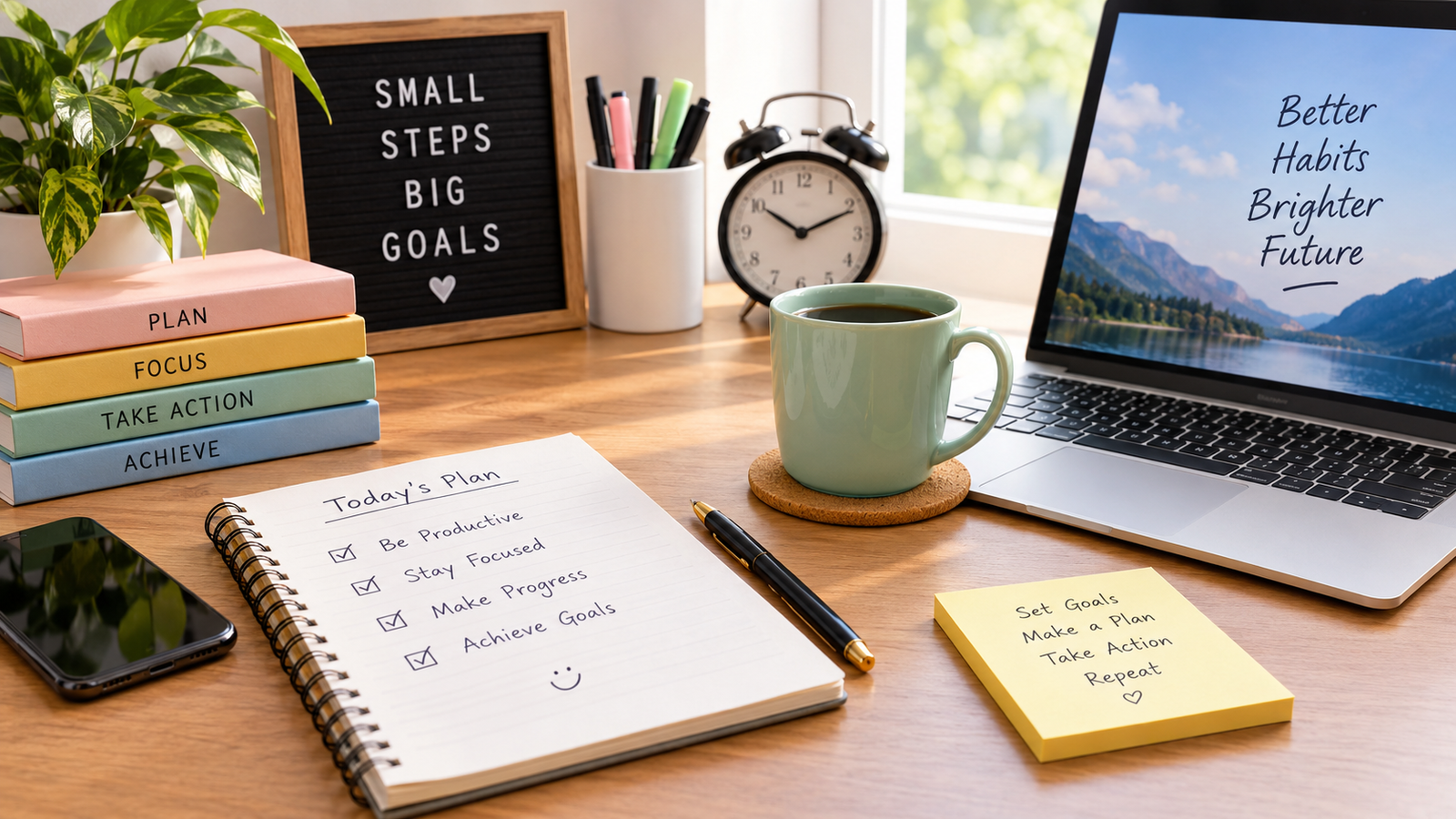
Staying productive in a busy world can feel challenging. Between work, studies, household responsibilities, personal commitments, and digital distractions, it is easy to reach the end of the day feeling exhausted without completing the tasks that matter most. The good news is that improving productivity does not require working longer hours or following a complicated schedule. By developing simple habits and organizing your time more effectively, you can make meaningful progress toward your goals while maintaining a healthier balance in your life.
Simple productivity tips can help you decide what deserves your attention, manage your daily responsibilities, reduce distractions, and use your energy more wisely. Whether you work from home, attend school or university, manage a household, or run a business, a practical daily routine can make your responsibilities easier to handle.
Productivity is not about staying busy every minute. It is about using your time and attention to complete meaningful work. A productive day may involve finishing an important assignment, spending quality time with family, exercising, or making progress on a personal project. The best routine is one that supports your priorities rather than creating unnecessary pressure.
In this guide, you will discover practical productivity tips to organize your day, improve time management, build consistent habits, stay focused, and achieve your personal and professional goals. These strategies are flexible enough to fit different lifestyles and can be introduced gradually without completely changing your daily routine.
Why Productivity Matters in Everyday Life
Productivity helps you make better use of your available time, energy, and resources. When you understand your priorities and have a plan for completing them, you can spend less time deciding what to do next and more time taking meaningful action.
A well-organized day can also reduce the stress that comes from forgotten appointments, approaching deadlines, and unfinished responsibilities. Instead of trying to remember every task, you can write things down, establish priorities, and work through them in a manageable order.
Good productivity habits can support personal growth as well. If you want to learn a new skill, improve your fitness, develop a website, or save money, consistent small actions can help you make progress. You do not need to achieve everything immediately; steady effort often matters more than occasional bursts of motivation.
However, productivity should not be confused with constant activity. Taking breaks, sleeping enough, spending time with loved ones, and allowing yourself to relax are important parts of a balanced lifestyle. A useful productivity system helps you complete important work while leaving room for rest and personal well-being.
1. Start Your Day With a Clear Plan
One of the simplest productivity tips is to begin each day with a clear understanding of what you want to accomplish. Without a plan, you may spend the morning reacting to messages, handling minor tasks, or switching between responsibilities without making progress on your main goals.
Take five to ten minutes at the beginning of the day to review your schedule and identify your most important tasks. Consider upcoming deadlines, appointments, work responsibilities, and personal commitments. Write down what needs to be completed and estimate how much time each task may require.
Your daily plan should be realistic. If you have several hours of meetings, classes, or household responsibilities, do not create a schedule that assumes you will have an entire day available for focused work. Leave space for meals, travel, breaks, and unexpected interruptions.
A simple notebook, paper planner, calendar, or digital task manager can help you organize your day. The tool itself is less important than using it consistently. Choose something convenient enough that you will continue using it even when life becomes busy.
At the end of the day, review your plan and identify what remains unfinished. Move incomplete tasks to another suitable time rather than treating every delay as a failure. Planning should help you adjust your workload, not make you feel guilty about being human.
2. Identify Your Three Most Important Tasks
Long to-do lists can make a day feel overwhelming. When every task appears equally important, it becomes difficult to decide where to begin. A practical solution is to choose three important tasks that deserve priority.
These tasks should have a meaningful effect on your goals or responsibilities. For a student, they might include preparing for an examination, completing an assignment, and reviewing difficult course material. For someone working from home, they might include finishing a report, responding to an essential client request, and completing a key project milestone.
Write these priorities at the top of your daily task list. Whenever possible, work on one of them before spending too much time on less important activities. Completing even one high-priority task can make the day feel more productive.
The three-task method is flexible. Some days may require more attention to urgent responsibilities, while others may be devoted to a larger project. You can still include small administrative tasks on your list, but do not let them replace the work that matters most.
Remember that not every day will go according to plan. If an unexpected responsibility becomes urgent, adjust your priorities. The purpose is to focus your attention, not to follow a rigid system regardless of circumstances.
3. Use Time Blocking to Organize Your Schedule
Time blocking is a time management strategy in which you reserve specific periods for particular activities. Instead of writing only what you need to do, you decide when you intend to do it.
For example, you might reserve the first part of your morning for focused work, a later period for emails and messages, the afternoon for meetings or study, and the evening for exercise and personal responsibilities. The exact schedule should reflect your energy levels and daily commitments.
Time blocking helps reduce the uncertainty of an unstructured day. When you have already assigned a task to a particular period, you spend less time deciding what to do next. It can also help you identify unrealistic expectations. If your calendar contains more work than the available hours can accommodate, you know that something needs to be postponed, delegated, or removed.
Avoid scheduling every minute. Leave buffer periods between demanding activities and allow extra time for tasks that frequently take longer than expected. A flexible calendar is more useful than one that collapses after a single delay.
You can also use time blocks for personal activities. Scheduling meals, exercise, relaxation, and family time can help prevent work from occupying every available hour.
4. Break Large Goals Into Smaller Tasks
Large goals often feel difficult because the steps required to achieve them are unclear. A goal such as starting a website, learning a programming language, improving fitness, or completing a major project may involve many separate activities.
Instead of focusing only on the final result, divide the goal into smaller, manageable tasks. If you want to start a website, your first steps might include choosing a topic, selecting a domain name, setting up hosting, designing the main pages, and publishing your first article. Each task creates a clear next step.
Smaller tasks are easier to schedule and often feel less intimidating. They also make progress more visible. Rather than waiting until a large project is finished to feel successful, you can recognize the milestones you complete along the way.
Make each task specific enough that you know when it is finished. For example, replace “work on my project” with “write the introduction and outline three main sections.” A clear action reduces uncertainty and makes it easier to begin.
Review your larger goals regularly and adjust the steps as you learn more. Breaking goals into smaller tasks does not mean you must plan everything perfectly at the beginning. It gives you a practical starting point and a way to move forward.
5. Avoid Multitasking and Focus on One Task at a Time
Multitasking may appear efficient, but switching repeatedly between unrelated tasks can interrupt concentration and increase the chance of mistakes. You might begin writing an article, check a message, open social media, and then return to the article without remembering exactly where you stopped.
Single-tasking means giving one activity your attention for a defined period. Close unnecessary tabs, silence nonessential notifications, and keep only the materials required for the current task nearby.
If you are writing, write. If you are studying, focus on the lesson. If you are completing a report, avoid checking unrelated messages every few minutes. You may not be able to eliminate every interruption, especially when caring for children or handling a busy job, but reducing avoidable switching can still help.
Some tasks can be combined without creating a problem. For example, you may listen to familiar audio while doing a simple household activity. However, tasks that require careful thinking, reading, or decision-making generally benefit from more direct attention.
If you remember another task while working, write it on a separate list rather than immediately switching to it. This allows you to return to the current activity and handle the new task later.
6. Try the Pomodoro Technique for Better Focus
The Pomodoro Technique is a time management method that divides work into focused intervals separated by short breaks. A common version uses 25 minutes of work followed by a five-minute break, with a longer break after several intervals.
To try this method, choose one specific task and set a timer for a manageable period. Work on that task until the timer ends, then take a short break. During the break, stand up, stretch, drink water, or look away from your screen.
The technique can be helpful when you find it difficult to begin a task or maintain concentration for long periods. Short work intervals can make a large assignment feel less intimidating and create regular opportunities to rest.
You do not need to follow the traditional timing exactly. Some people prefer 40-minute or 50-minute focus sessions, while others benefit from shorter intervals. Choose a pattern that fits the task and your attention span.
The Pomodoro Technique is a tool rather than a rule. If you reach a productive flow and can continue comfortably, you may choose to finish a natural section before taking a break. The goal is sustainable concentration, not constant clock-watching.
7. Reduce Digital Distractions
Digital distractions are among the most common obstacles to productivity. Social media, messaging apps, email notifications, videos, and online browsing can interrupt concentration even when you intend to check them for only a moment.
Begin by identifying which distractions affect you most. You might notice that you frequently check your phone while studying or open social media whenever a task becomes difficult. Understanding the pattern helps you choose a practical solution.
During focused work, place your phone out of immediate reach if you do not need it. Turn off nonessential notifications, use website-blocking tools when helpful, or temporarily close apps that encourage unnecessary browsing.
You can also create specific times for checking messages and email. Instead of responding to every notification immediately, review communications during designated periods, unless your job or responsibilities require faster responses.
Digital tools can also improve productivity when used intentionally. Calendars, reminders, document editors, and task managers can organize your work. The important distinction is whether technology supports your priorities or repeatedly pulls your attention away from them.
8. Keep Your Workspace Organized
An organized workspace can make it easier to locate important materials and begin work without unnecessary delays. You do not need an expensive office or a perfect desk. A clean, functional space with the tools you use regularly is often enough.
Start by removing items that do not belong in your immediate work area. Keep essential materials such as your notebook, computer, pens, charger, and current documents within easy reach. Store unrelated items elsewhere so they do not compete for attention.
If you work from home, try to establish a consistent location for focused activities. This could be a dedicated desk, a small table, or a quiet corner. When possible, choose a place with suitable lighting, a comfortable chair, and minimal interruptions.
Digital organization matters too. Use clear file names, create folders for different projects, and avoid saving every document to one crowded location. A simple folder system can reduce the time spent searching for files.
At the end of your workday, spend a few minutes putting things away and preparing the materials needed for tomorrow. This small habit can make the next morning feel more organized and reduce the effort required to get started.
9. Learn to Prioritize Urgent and Important Tasks
Not every task deserves the same amount of time or attention. Some activities have serious deadlines or consequences, while others are useful but can wait. Learning to distinguish between them is an essential time management skill.
Urgent tasks require attention soon, such as responding to a time-sensitive request or preparing for an upcoming deadline. Important tasks contribute to your long-term goals, such as learning a valuable skill, planning a project, or maintaining your health.
A common productivity problem is spending the entire day responding to urgent demands while postponing important activities. To avoid this pattern, reserve time for tasks that contribute to long-term progress, even when they do not have an immediate deadline.
When evaluating a task, ask yourself what will happen if it is delayed, whether someone else can handle it, and whether it supports one of your main priorities. These questions can help you decide what deserves attention first.
You do not need a complicated scoring system. A short daily review of your responsibilities is often enough to identify the most important work and prevent minor tasks from consuming your schedule.
10. Build a Consistent Morning Routine
A morning routine can help you begin the day with intention instead of immediately reacting to messages and demands. It does not need to start at an unusually early hour or involve a long list of habits.
Choose a few activities that support your needs. You might wake up at a consistent time, drink water, wash and dress, eat breakfast, stretch, review your calendar, or spend a few minutes reading. The best routine is one that fits your lifestyle and helps you feel prepared.
Avoid comparing your morning with routines promoted by successful people online. Someone else’s schedule may depend on different working hours, family responsibilities, or personal circumstances. A routine that works for you is more valuable than one that looks impressive but is difficult to maintain.
Prepare for the morning the night before whenever possible. Set out clothing, organize your bag, prepare basic breakfast items, or write down your first priority. Reducing small morning decisions can make the start of the day smoother.
If your mornings are unpredictable, keep the routine flexible. Even a brief period of planning or quiet preparation can help you approach the day with greater clarity.
11. Use the Two-Minute Rule Wisely
The two-minute rule is a simple productivity idea: if a small task can genuinely be completed in about two minutes, consider doing it immediately rather than adding it to a long list.
Examples might include putting a document in the correct folder, confirming a simple appointment, washing a cup, or writing down a reminder. Completing tiny tasks quickly can prevent them from accumulating into a larger administrative burden.
However, the rule should not become an excuse to interrupt important work constantly. If you are in the middle of a focused task, even a small interruption may break your concentration. In that situation, write the task down and complete several small tasks together later.
Use the rule selectively. Some quick tasks may not be important, even if they are easy to complete. Priorities still matter, so avoid spending your best concentration time on minor activities while a major deadline remains unfinished.
The main purpose is to reduce unnecessary clutter and make small responsibilities easier to manage. Used thoughtfully, this approach can complement time blocking and daily planning.
12. Take Regular Breaks to Protect Your Energy
Working continuously for long periods can leave you mentally tired and less focused. Regular breaks provide an opportunity to rest, move, and return to work with renewed attention.
During a break, try standing up, stretching, taking a short walk, getting some fresh air, or drinking water. If you spend much of your day looking at a screen, looking away from it periodically may also help reduce visual discomfort.
Choose break activities that genuinely help you relax. Scrolling through social media may feel like a break, but it can easily turn into an extended distraction. A brief walk or a few quiet minutes may be more restorative.
The length and frequency of breaks depend on your workload, preferences, and the type of task you are performing. Some activities require uninterrupted periods, while others can be divided into smaller sections.
Rest is not wasted time. Sustainable productivity depends on balancing effort with recovery. If you consistently feel exhausted, consider whether your workload, sleep, or schedule needs adjustment rather than trying to solve every problem by working harder.
13. Learn to Say No and Set Boundaries
Taking on too many responsibilities can make even a well-organized schedule impossible to follow. Productivity often improves when you recognize your limits and make thoughtful decisions about what you can realistically do.
Before agreeing to a new task, consider your existing commitments, available time, and energy. If the request is not urgent, you may ask for more time to respond. If you cannot reasonably take it on, a polite and clear refusal may be appropriate.
Boundaries are particularly important when working remotely or managing responsibilities at home. Establishing working hours, communicating availability, and protecting personal time can help reduce the feeling that you must always be available.
You may not be able to decline every request, especially when dealing with essential family, study, or work obligations. In those cases, discuss priorities and deadlines so that expectations remain realistic.
Setting boundaries is not about avoiding responsibility. It is about managing commitments in a way that allows you to meet important obligations without repeatedly overloading your schedule.
14. Use Productivity Tools Without Overcomplicating Your System
Productivity apps and digital tools can help you manage tasks, deadlines, notes, and schedules. However, using too many tools can create extra work and make it harder to keep information organized.
A digital calendar is useful for appointments, meetings, deadlines, and time blocks. A task manager can help you record responsibilities and track progress. A notes app can store ideas, checklists, and reference information.
You can also use a simple paper planner or notebook if you prefer writing by hand. There is no requirement to use an app for every part of your day.
Choose one main place to track tasks so that responsibilities do not become scattered across several systems. If you use multiple tools, give each a clear purpose. For example, keep appointments in your calendar and detailed project steps in a task manager.
Review your system periodically. If maintaining the tool takes more time than it saves, simplify it. The best productivity system is one you understand, trust, and use consistently.
15. Track Your Progress and Celebrate Small Wins
Tracking progress helps you understand whether your daily actions are moving you toward your goals. Without a review process, it can be difficult to recognize improvements or identify habits that are not working.
At the end of the day, review what you completed, what remains unfinished, and what needs attention tomorrow. You can use a checklist, a journal, or a simple note. The process should take only a few minutes.
Look for patterns over time. You may discover that you focus best in the morning, underestimate how long writing tasks take, or lose concentration when your phone is nearby. These observations can help you adjust your schedule more effectively.
Recognize small achievements as well. Completing a difficult assignment, exercising as planned, or making consistent progress on a long-term project deserves acknowledgment. Celebrating progress can make it easier to maintain motivation.
Avoid treating an incomplete to-do list as proof of failure. Some tasks take longer than expected, and unexpected events are part of daily life. Evaluate your system honestly, adjust your expectations, and continue making progress.
16. Set SMART Goals for Better Results
Clear goals provide direction and help you decide which daily tasks matter most. One commonly used approach is the SMART framework, which encourages goals to be specific, measurable, achievable, relevant, and time-bound.
A vague goal such as “be more productive” is difficult to measure. A more specific goal might be “complete three focused study sessions each weekday for the next two weeks.” This gives you a clear action and a time period for reviewing progress.
Make sure your goals are realistic. An ambitious plan can be motivating, but goals that consistently exceed your available time may lead to frustration. Consider your responsibilities, current skills, and resources before deciding what you can achieve.
Break each larger goal into weekly and daily actions. If you want to learn a new skill, decide which lesson to complete or which exercise to practice today. If you want to improve your fitness, plan specific activities that fit your schedule.
Review your goals regularly and revise them when circumstances change. A goal should guide your decisions, not prevent you from adapting to new priorities or personal needs.
17. Create a Balanced Evening Routine
The way you finish your day can influence how prepared you feel the next morning. A simple evening routine helps you close unfinished tasks, organize your surroundings, and create space for rest.
Spend a few minutes reviewing your completed work and selecting priorities for tomorrow. Put away materials, charge devices where needed, and prepare anything that will make the next morning easier.
Try to create a clear stopping point for work when your responsibilities allow. Continuing to check emails or work messages late into the evening can make it harder to disconnect, especially when the messages are not urgent.
Choose relaxing activities that suit you, such as reading, listening to calm music, talking with family, or preparing for bed. Reduce stimulating activities if they interfere with your sleep.
A productive evening does not require completing another long list of tasks. Sometimes the most useful thing you can do is prepare for tomorrow and allow yourself to rest.
18. Protect Your Health While Improving Productivity
Productivity is closely connected to your overall well-being. Poor sleep, inadequate breaks, constant stress, and an unrealistic workload can make it harder to concentrate and complete tasks effectively.
Try to maintain a consistent sleep schedule and allow enough time for rest. Eat regular, balanced meals, stay adequately hydrated, and include physical activity in your routine when possible. These habits support general health and can make daily responsibilities easier to manage.
Movement does not need to involve a demanding workout. A short walk, gentle stretching, or regular breaks from sitting can help you avoid remaining in one position for too long.
Pay attention to signs that your routine is becoming unsustainable. Persistent exhaustion, difficulty concentrating, irritability, or a constant sense of pressure may indicate that your workload or schedule needs adjustment.
If you feel overwhelmed, reduce your priorities to the most important tasks and ask for help when appropriate. Productivity should support your life rather than consume it. A balanced approach allows you to work toward your goals while protecting your health and relationships.
Sample Daily Schedule for Better Productivity
A sample schedule can help you apply these productivity tips to your own routine. The times below are illustrative; adjust them according to your work, studies, family responsibilities, and preferred sleep schedule.
7:00 AM – Morning preparation: Wake up, get ready, eat breakfast, and review your main priorities for the day.
8:00 AM – First focus session: Work on your most important task while limiting unnecessary notifications and interruptions.
9:30 AM – Short break: Stretch, drink water, and take a few minutes away from your main task.
9:45 AM – Second work session: Continue important work, study, or project activities.
12:00 PM – Lunch and rest: Eat a balanced meal and give yourself time to relax.
1:00 PM – Administrative tasks: Handle emails, messages, meetings, appointments, and other responsibilities that require attention.
3:00 PM – Progress session: Complete another meaningful task, review project milestones, or work on a personal goal.
5:00 PM – Personal time: Finish essential responsibilities, take a walk, exercise, or spend time with family.
8:00 PM – Evening review: Prepare for tomorrow, organize your workspace, and write down the next day’s priorities.
9:00 PM onward – Relaxation: Choose calming activities and prepare for sleep at a time that allows sufficient rest.
You do not have to follow this exact schedule. Its purpose is to demonstrate how focused work, administrative tasks, breaks, and personal time can fit into a balanced day.
Frequently Asked Questions About Productivity
What Are the Best Simple Productivity Tips?
Start by planning your day, identifying three important tasks, breaking large projects into smaller steps, and reducing digital distractions. Use a schedule that fits your responsibilities and review your progress at the end of the day.
How Can I Organize My Day Better?
Write down your responsibilities, identify deadlines, and assign realistic time blocks to important activities. Include breaks and buffer time, and avoid scheduling more work than you can reasonably complete.
How Can I Stop Procrastinating?
Begin by making the task smaller and identifying the first action you can take. Set a short focus period, remove obvious distractions, and start before waiting for perfect motivation. If you are procrastinating because the task is unclear or overwhelming, clarify the instructions or divide it into smaller steps.
Which Productivity Tools Are Best for Beginners?
A simple calendar, notebook, or task-management app is often enough. Choose one main place for your tasks and use additional tools only when they solve a specific problem.
How Can I Stay Productive Without Feeling Burned Out?
Set realistic goals, take regular breaks, protect your sleep, and establish boundaries around work. Focus on meaningful progress rather than trying to stay busy throughout the day. If your workload is consistently unmanageable, review your commitments and seek support where possible.
How Long Does It Take to Build Productivity Habits?
The time required varies depending on the habit, your circumstances, and how consistently you practice it. Start with one or two changes and repeat them regularly. Review what works and make adjustments instead of expecting an instant transformation.
Conclusion
Improving productivity does not require a perfect schedule or an entirely new lifestyle. Simple productivity tips such as planning your day, choosing your main priorities, breaking goals into smaller tasks, reducing distractions, and taking regular breaks can make daily responsibilities easier to manage.
The key is to create a system that works for your actual life. Use a calendar or notebook to organize your schedule, focus on one important task at a time, and review your progress regularly. Develop routines gradually and adjust them when your circumstances change.
Most importantly, remember that productivity is about meaningful progress, not constant activity. Protect your health, make time for relationships, and allow yourself to rest. By combining effective time management with realistic goals and consistent habits, you can organize your day more confidently and move toward your personal and professional goals one step at a time.
Leave a Reply